Recycling and Sustainability for Landscapers Victoria
 At Landscapers Victoria, sustainability is built into every stage of our work, from site clean-up to the final disposal decision. Our focus is on creating an eco-friendly waste disposal area that keeps reusable materials in circulation and reduces the volume sent to landfill. Whether we are clearing green waste, sorting mixed rubble, or handling packaging from a landscaping project, we aim to direct materials into a sustainable rubbish area that supports reuse, recycling, and responsible recovery. In practical terms, that means separating soil, timber, green organics, metals, concrete, and general waste as early as possible so each stream can be treated properly.
Our recycling approach is designed for the realities of local landscaping jobs across Victoria, where access, weather, and site size can all affect how waste is managed. We work with low-carbon vans to reduce emissions on the road and to make multi-stop collections more efficient. These vehicles help us lower fuel use while still handling the mix of materials typical of garden makeovers, demolition clear-outs, and commercial maintenance projects. It is one of the most effective ways we can keep our rubbish area sustainable without sacrificing reliability or service quality.
We also focus on borough-specific waste separation practices, because different local councils and transfer stations often require different sorting standards. In some areas, soil and rubble must be kept separate from organic waste; in others, timber and metal need to be staged independently for recovery. By adapting to these local expectations, our sustainable rubbish area can respond to the needs of nearby transfer stations and recycling facilities while improving the chances that more material is recovered and reused. 
Our recycling percentage target is to divert at least 80% of collected waste from landfill wherever project conditions allow. This target is measured across green waste, clean fill, timber, metal, and other recyclable loads, and it guides how we plan collections and sorting. Reaching that goal means paying attention to what happens before disposal: careful separation, compact loading, and choosing the right destination for each material stream. It also means using local transfer stations that support sorting and recovery rather than sending mixed loads to landfill by default.
Across Victoria, transfer stations play a vital role in sustainable waste handling. We make use of local facilities where possible to reduce transport distances and to keep disposal practical for clients across the metropolitan and outer suburban areas. Depending on the location and material type, waste may be directed through facilities that accept green waste, soil, masonry, concrete, hard plastics, or mixed recyclables. By choosing nearby transfer stations with strong resource recovery programs, we reduce travel emissions and make our eco-friendly waste disposal area more efficient.
We are also committed to supporting the community through partnerships with charities and donation-focused recovery pathways. When items such as usable pots, garden edging, outdoor furniture, timber offcuts, or serviceable tools can be safely repurposed, we aim to redirect them away from disposal and toward charitable or reuse channels. 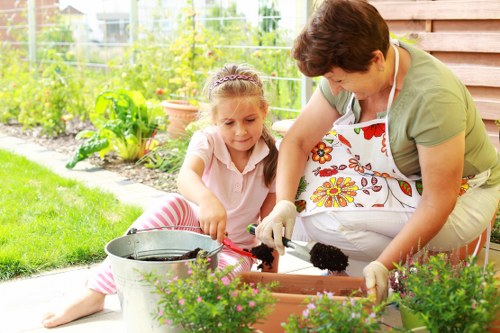 This approach reduces waste while helping local organisations extend the life of practical materials. In a busy landscaping environment, it is a simple but meaningful way to keep useful items out of the rubbish area and give them a second life.
Green waste recycling remains one of the most important parts of our sustainability strategy. Leaves, branches, grass, and pruning waste are often suitable for mulching or composting, depending on contamination levels and local facility requirements. We take care to keep organic waste free from plastics and general rubbish so it can enter the right processing stream. This is especially important for properties where large garden clearances generate mixed materials, because even small amounts of contamination can reduce the quality of recovered product.
We also place strong emphasis on recycling construction-related materials that commonly arise during landscaping work. Concrete paths, bricks, pavers, and clean stone can often be crushed and reused as aggregate, while untreated timber may be recycled or repurposed where facility rules permit. Metals are sorted separately for scrap recovery, and cardboard or packaging from supplied materials is directed into the relevant recycling stream. These actions help create a more sustainable rubbish area that supports circular outcomes rather than simple disposal.
To keep operations efficient, our crew plans collections around load type and destination, which helps us reduce unnecessary travel and avoid cross-contamination between waste streams. 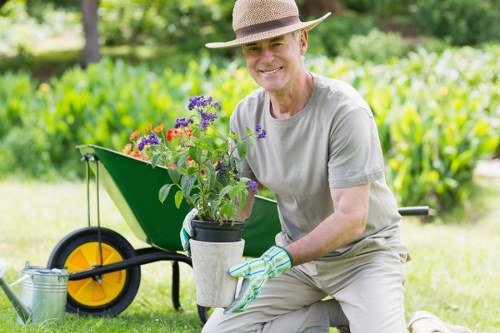 This careful approach is part of how we maintain an eco-friendly waste disposal area for every project, whether we are working on a small residential garden or a larger commercial landscape site. It also supports our broader sustainability goals by ensuring that recyclable materials are handled in the most responsible way possible.
Our low-carbon vans are part of a wider effort to reduce the environmental footprint of landscaping services in Victoria. These vehicles are chosen for their improved fuel efficiency and their ability to support regular city and suburban collections without excessive emissions. When paired with smart route planning, they help cut the carbon impact associated with waste transport. For clients, this means their rubbish is being handled in a way that reflects modern environmental expectations and practical sustainability goals.
Local waste management in Victoria increasingly depends on responsible separation at source, and we align our recycling practices with that principle. By sorting green waste, clean fill, recyclable metals, and reusable materials early, we make it easier for transfer stations and recovery facilities to process loads effectively. In some boroughs, this can mean keeping organics apart from mixed debris; in others, it means sending clean rubble directly into a separate recycling channel. These local differences matter, and our team works to match them with each job.
 Sustainability is not a single action but a system of habits, and that is why we continue improving how we manage the eco-friendly waste disposal area and sustainable rubbish area used across our work. From our recycling percentage target to our charity partnerships and low-carbon vans, each decision is made to reduce landfill pressure and support better material recovery. By combining local transfer station use, smart sorting, and reuse where possible, Landscapers Victoria is committed to keeping landscape waste moving toward a cleaner, more circular future.

